Laugh at the End of the World
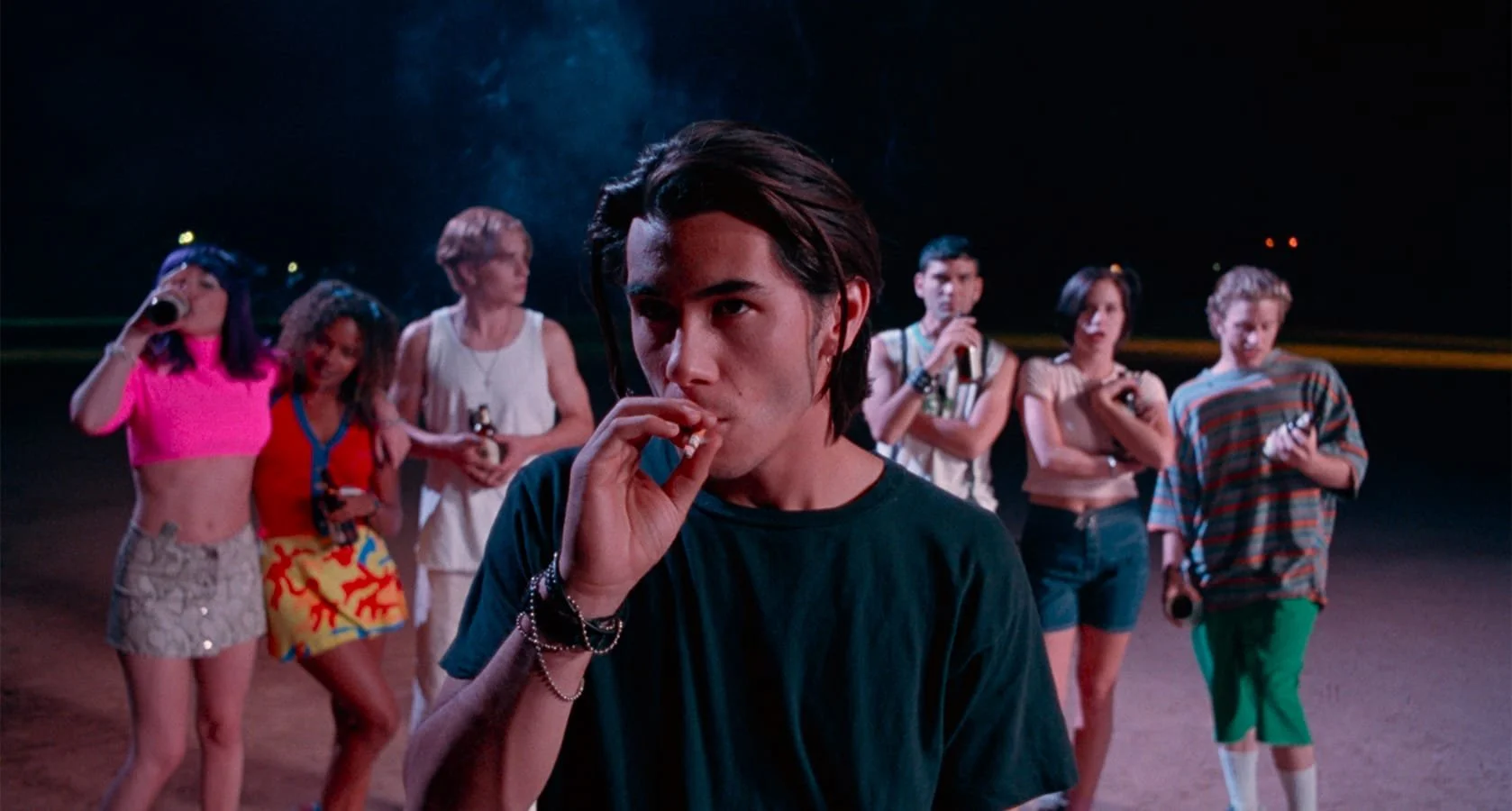
Gregg Araki’s Cinema of Hope
There has always been something quietly radical about the way Gregg Araki lets his characters laugh.
It isn't laughter born from certainty or comfort. More often, it arrives in the middle of catastrophe—a roadside diner after violence, a bedroom after heartbreak, an absurd conversation while the world appears to be unraveling around them. In Araki's cinema, humor isn't an escape from despair; it is proof that despair has failed to erase the possibility of joy. His films have long understood that survival is not simply remaining alive. It is maintaining the ability to desire, to connect, to find beauty in chaos, and occasionally, to laugh directly in the face of a culture determined to flatten individuality.
As Araki prepares to return with I Want Your Sex, his first feature in over a decade, his work feels strangely more contemporary than ever. While early audiences often labeled his films nihilistic, time has revealed something far more generous beneath the neon palettes, abrasive soundtracks, and anarchic energy. His cinema has never been about celebrating apocalypse. It has been about insisting that people continue living inside one.
The irony becomes difficult to ignore.
When The Doom Generation arrived in 1995, its title reflected a generation supposedly doomed by violence, AIDS, political conservatism, and an increasingly commercialized America. Critics frequently interpreted the film's excesses—its stylized violence, relentless pop culture references, and emotionally volatile relationships—as symptoms of youthful collapse. But Araki was never documenting doom as much as exposing the absurdity of believing an entire generation had already been lost. His characters rejected respectability not because they lacked morality, but because respectability had never promised them safety in the first place.
Three decades later, "doom" has become the defining vocabulary of another generation.
Gen Z has inherited climate anxiety, economic instability, political polarization, and an internet that quietly documents nearly every aspect of daily life. But unlike the young people populating Araki's early films, many have never experienced adolescence without smartphones, location sharing, algorithmic feeds, or the subtle pressure of imagining an invisible audience. If previous generations stumbled through intimacy privately, this one often negotiates it in public. The hesitation that many critics identify in young people today is less a personal failing than a rational adaptation to a culture where mistakes rarely disappear.
That doesn't mean the consequences are any less profound.
Increasingly, life is experienced through systems designed to organize, optimize, and archive it. Relationships begin with profiles before eye contact. Nights out are documented before they're remembered. Even spontaneity can feel performative, existing with the knowledge that someone is probably recording. We have become remarkably efficient at documenting experience, while often struggling to surrender to it.
Araki's films have always resisted that instinct.
His characters kiss impulsively, argue loudly, drive nowhere in particular, and stumble through intimacy without imagining how the moment might appear to strangers. Their worlds are messy because real life is messy. They rarely know who they are before living; identity emerges through movement rather than performance. Long before algorithms encouraged us to curate ourselves into coherent personal brands, Araki insisted that contradiction was not only inevitable but beautiful.
That organic quality feels almost radical today.
It would also be unfair to suggest that technology itself is the enemy. Digital spaces have allowed marginalized communities to find one another, expanded access to art, and created entirely new forms of connection that previous generations could scarcely imagine. Many meaningful relationships begin online. Many creative careers exist because of the internet. The issue is not technology's existence but its quiet influence over how we imagine ourselves. When every interaction carries the possibility of permanent visibility, authenticity becomes harder to locate beneath self-awareness.
That shift has transformed sensuality as much as sexuality.
Increasingly, intimacy is organized through interfaces—profiles, prompts, swipes, compatibility scores, read receipts, and carefully managed personas. None of these systems are inherently hollow, nor do they erase the possibility of genuine connection. But they inevitably reshape the language of desire, encouraging us to approach intimacy as something negotiated, optimized, and efficiently arranged rather than unpredictably discovered. Sensuality risks becoming transactional: a sequence of managed exchanges instead of an openness to experience itself.
It is precisely here that I Want Your Sex feels so timely.
Araki has spoken about wanting to explore sensuality again, a subject that has always existed at the center of his work but has rarely been treated as mere provocation. Sex in Araki's films is not simply erotic spectacle or rebellion for rebellion's sake. It is communication. It is vulnerability. It is people attempting to understand themselves through another person's presence. Bodies become another language when words inevitably fail.
That perspective feels unexpectedly hopeful.
The New Queer Cinema movement undoubtedly transformed representation, but Araki's lasting contribution may be emotional rather than historical. His films never asked queer characters to justify their existence. They simply allowed them to exist—alongside boredom, humor, terrible decisions, impossible crushes, cheap apartments, loud music, and existential dread. Queerness was never the lesson. It was simply one thread in the larger, messier act of living.
Perhaps that is why younger audiences continue discovering his films decades later.
His characters are not aspirational because they possess answers. They are aspirational because they remain open to experience. They fall in love without certainty. They make mistakes without imagining those mistakes as permanent identities. They build community accidentally, through proximity rather than algorithms. The friendships, romances, and chosen families that emerge throughout Araki's filmography are never optimized. They are stumbled into.
Hope has always been the most overlooked aspect of Gregg Araki's cinema.
Beneath the violence, the irony, the pop soundtracks, and the apocalyptic imagery is a filmmaker who has always believed people can still find one another. His characters rarely save the world, but they continually choose connection over isolation, desire over shame, curiosity over fear, and laughter over despair. Resistance, in Araki's films, has never required grand speeches or revolutionary manifestos. Sometimes it is simply refusing to let catastrophe dictate the terms of your humanity.
That may be why I Want Your Sex feels less like a return than a continuation.
Rather than retreating into nostalgia for an analog past, Araki appears poised to revisit the same questions that have animated his career for decades—desire, pleasure, vulnerability, and freedom—but through the lens of a generation navigating them under entirely different conditions. If The Doom Generation exposed the absurdity of believing the future had already been lost, I Want Your Sex arrives asking something equally urgent: do we still possess the courage to experience life before documenting it?
The answer has never been simple, and Araki has never pretended otherwise.
But his films continue to offer the same quiet invitation they always have: keep moving. Keep laughing. Keep falling in love with people, places, songs, movies, and moments that refuse easy categorization. The world may always insist that the next generation is doomed. Gregg Araki has spent more than thirty years suggesting something else entirely—that every generation inherits its own apocalypse, and every generation must decide whether it will merely survive it or truly live inside it.
In an era increasingly shaped by algorithms, self-surveillance, and endless optimization, that belief feels less like nostalgia than an act of resistance.