Who Did I Marry?
How cinema is teaching us our partner is not at all who they seem.
Social media was supposed to be the clearest version of us. A place to showcase our entire being, not hide in the shadows. But within a decade, it immediately flipped. What began as a basis for self-expression mutated into an endless hellscape of filters, cropping, and refining ourselves until the only bits that survive are an entirely different human than before.
Of the utmost irony, now the more we share, the less we actually reveal. At the entry of social media, generations utilized Tumblr for their truest feelings, Facebook for their relationships, and MySpace for connection. Yet we swung to the other end of the pendulum, using Instagram and TikTok alongside filters, refinement, and perfectionism to showcase only what feels acceptable.
The result isn’t that we are truly lying, but rather that what becomes legible isn’t our whole self, turning identity into something much more polished and, at the same time, untrustworthy. Over time, this performance stops feeling like a distortion and becomes the framework for this new generation online. The curated avatar we show the world is thus the expected self, which is why, time and time again, we are disappointed not only with our interactions in real time but also with our own selves.
The same culture that emphasized showcasing our best version online is now showing us, through cinema, that love is just another intertwined narrative of performance. One that can be edited, refined, and reshaped, yet can also collapse at any moment. If social media has conditioned us to distort reality and self-image, then film is mirroring that our current direction will only lead to more devastating realities if we continue to build on facades rather than who we truly are.
Recent films build relationships around layers of performance, making identity unstable and mediated. The question shifts from 'who is this person?' to 'how convincing is the version we choose to believe?'
The Drama opens on the illusion of trust, only to unravel within seconds over a single devastating revelation. The film forces us to grapple with sustenance beyond character or physical image, about what our own partner is capable of thinking alone. One singular admittance leads to a single, irreversible fracture. The person you thought you knew distorts into something beyond incompatible and digestible.
No Other Choice presents identity tied to familial relationships. The film demonstrates the necessity to provide, and more importantly, to play your defined role within your family. What comes about is not outright fraudulent; through practice, it shows how deception on the surface can hide the efforts behind the scenes to keep yourself and others afloat, out of fear of those around you discovering who you really are.
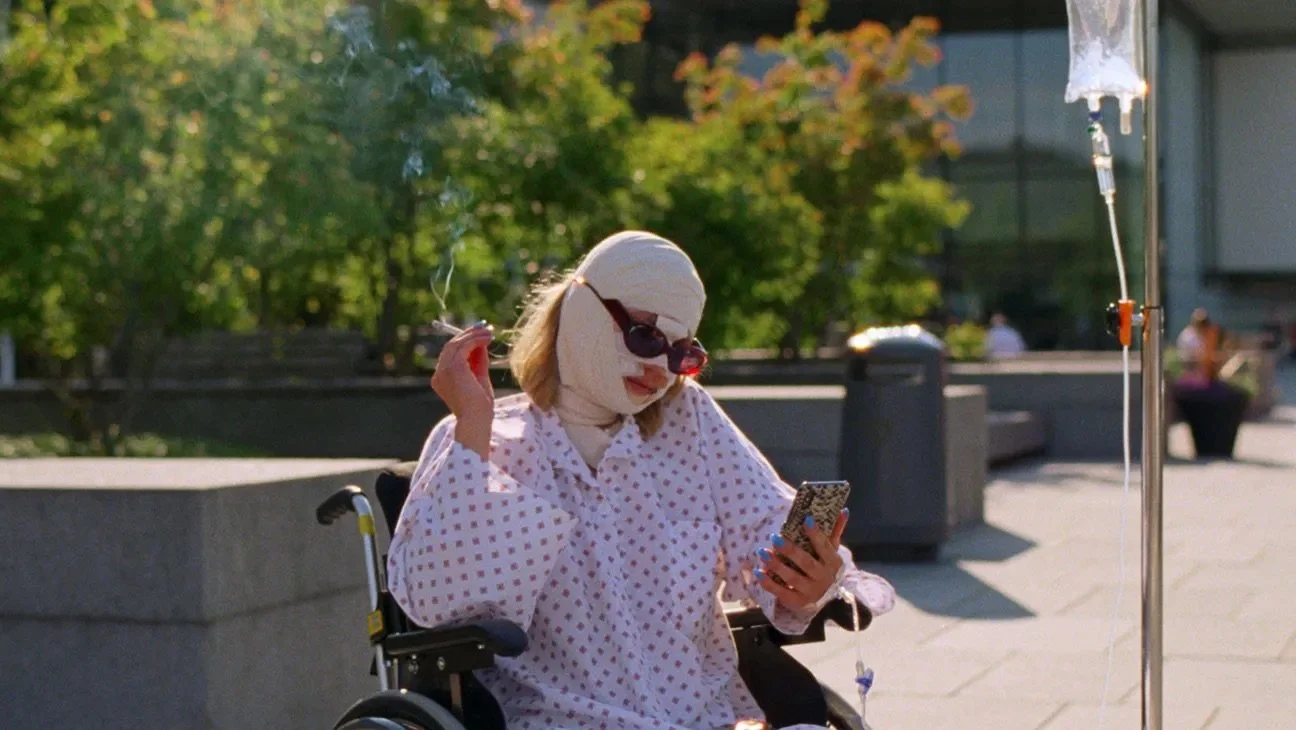
Sick of Myself amplifies identity as a competitive act, built through visibility and attention. Relationships become spectacle, authenticity fades as those who best command the spotlight take center stage. Love yields to social validation, dictated by one’s ability to perform suffering, desirability, or need.
Bodies Bodies Bodies reframes intimacy as a mode of reputation. Each character throws away their own individuality and finds importance through the people, more so connections, around them. Knowing someone beyond surface level isn’t about connection, but about social currency. Identity isn’t a mere expression of what is inside, but more so a pathway to climb social ladders into a spotlight curated through deception.
May December erases the line between the original and the imitation, as identity is studied, practiced, and copied. The main relationship feels less like a genuine connection and more like a script performed so often that it replaces any sense of authenticity. What remains is not some hidden truth, but layers of performance without a clear starting point.
If social media teaches us how to construct ourselves into something digestible, cinema has taken the exact opposite direction. These films don’t mirror performatism; they go a step beyond and expose how easily it replaces something real. No matter how consistent identity can be rehearsed, there is a limit to which it won’t be mistaken for truth in our daily lives.
What once read as exaggerated storytelling now reads closer to a diagnosis of everyday reality. As contemporary cinema continues to push the boundary of identity, it is clear that the cultivated versions of ourselves will only come closer to rupturing under the microscope of contemporary artists. With such intense rehearsal of what doesn’t exist, it also embeds fear of what we will discover when what is right in front of us finally snaps.
Thus, we find now exactly why the anxiety begins to deepen. It is no longer about being deceived on the Internet, as that control was sacrificed years ago. Yet the deception intertwined with relationships now beckons the question: “Can we really survive this?” How do we uphold relationships in one aspect of life when the other version of ourselves is built upon lies?
These films aren’t simply cynical about love; they address a cultural shift in how identity forms. Social media changed not just self-presentation, but what we believe a self is. Film now holds the task to dissect these performances, asking what remains when they collapse.