‘Paris Was A Woman’ Return and Restoration
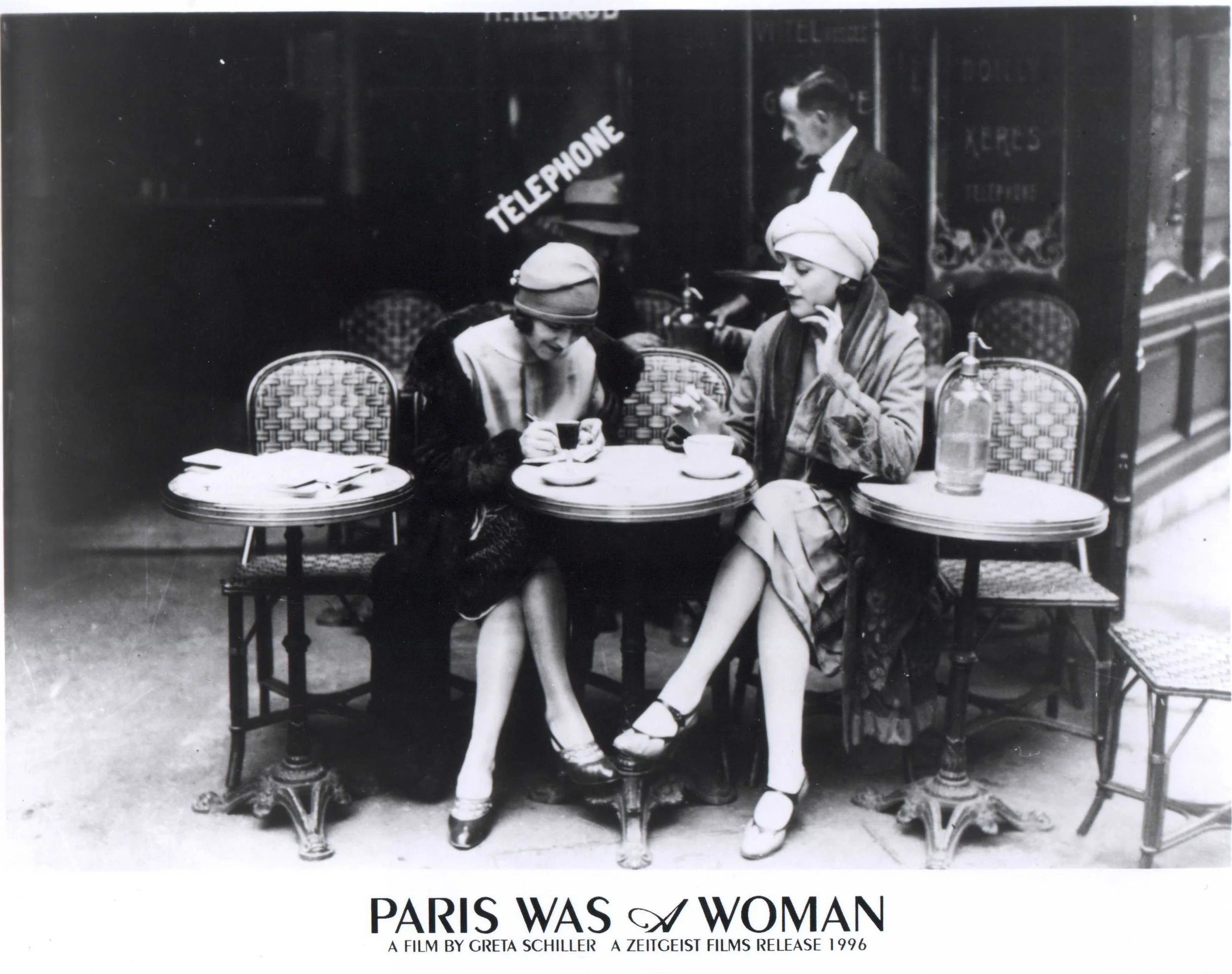
Paris Was a Woman Returns to the Big Screen in a Glorious 4K Restoration
When we think of Paris in the 1920s, a familiar collection of names tends to emerge. Ernest Hemingway, Pablo Picasso, James Joyce, and F. Scott Fitzgerald have long dominated our romantic understanding of the city’s artistic golden age. But beyond the celebrated men of the Lost Generation, another extraordinary community was busy redefining the cultural landscape. These were women whose contributions to literature, photography, publishing, and the arts helped establish Paris as a haven for creative freedom.
Thirty years after its original release, Greta Schiller’s Paris Was a Woman returns to the big screen in a newly restored 4K presentation, opening October 16 at New York’s Metrograph. The restoration, undertaken by IndieCollect in association with the Women’s Film Preservation Fund, offers a renewed opportunity to discover a documentary dedicated to the women whose stories have too often occupied the margins of cultural history.
Originally released in 1996, Paris Was a Woman transports audiences to the Left Bank during the early decades of the twentieth century, when an influx of expatriate artists and intellectuals transformed the neighborhood into a flourishing creative community. Among them were literary figures Gertrude Stein, Alice B. Toklas, Djuna Barnes, and Colette, alongside photographers, publishers, and booksellers whose contributions helped shape the modernist movement.
Through archival photographs, newly discovered home movies, and interviews, Schiller assembles a collective portrait of women united by their desire for artistic independence. Their accomplishments extended far beyond the pages of their writing. Sylvia Beach, founder of the legendary Shakespeare and Company bookshop, famously published James Joyce’s Ulysses, while Adrienne Monnier established a literary gathering place of her own. Together, these women fostered an intellectual environment that challenged traditional expectations of gender, sexuality, and artistic expression.
For many, Paris represented something more significant than an opportunity to pursue creative ambitions. It offered the possibility of living outside the restrictive social conventions of their home countries. Same-sex relationships, unconventional domestic arrangements, and alternative forms of artistic collaboration became integral to the community Schiller documents. In this sense, Paris Was a Woman is as much a history of queer liberation as it is an exploration of modernist art.
This intersection of personal freedom and cultural history has remained central to Schiller’s filmmaking career. More than a decade before Paris Was a Woman, she directed the groundbreaking documentary Before Stonewall (1984), which examined the development of gay and lesbian communities in America prior to the historic 1969 uprising at New York’s Stonewall Inn.
Rather than treating Stonewall as the beginning of queer history, Schiller traced the generations of activism, resistance, and community building that preceded it. Combining archival footage with firsthand recollections, the documentary helped preserve experiences that mainstream historical accounts had largely neglected. The film was subsequently selected for preservation in the National Film Registry in 2019, cementing its importance within American documentary cinema.
Alongside longtime collaborator Andrea Weiss, who wrote Paris Was a Woman, Schiller co-founded Jezebel Productions in 1985. Their work has consistently sought to recover overlooked cultural narratives, from the pioneering female jazz musicians of International Sweethearts of Rhythm (1986) to the student activism explored in their more recent documentary The Five Demands (2023).
The return of Paris Was a Woman is particularly fitting within this larger body of work. Film restoration is not simply a matter of improving image quality. It is also an act of cultural preservation, ensuring that the histories captured on screen remain accessible to audiences who might otherwise never encounter them.
Metrograph will celebrate the restoration with special appearances by Schiller and Weiss, including filmmaker Q&As on October 16 and 17. The opening-night conversation will be moderated by journalist Laura Flanders, while the following afternoon’s discussion will be led by film scholar Jane Gaines. Weiss will also participate in a book signing on October 16, with an additional introduction by IndieCollect president Sandra Schulberg scheduled for October 18.
For a documentary concerned with reclaiming forgotten histories, there is something especially appropriate about its own return to theaters three decades later. Paris Was a Woman invites audiences to reconsider who gets remembered when we celebrate an artistic movement, and whose stories remain waiting to be rediscovered.